How to Feed and Maintain Your Sourdough Starter
If you've recently either obtained or made your own sourdough starter, congratulations!
Your sourdough starter is a special combination of yeast and bacteria that is alive and requires regular feeding, much like a pet. To establish a connection with your starter, many bakers give it a name. This can help you remember to take care of it and feel responsible if you forget to feed it. So go ahead and choose a name for it!
To ensure that it stays healthy and active, it's important to give it regular feedings. If you're planning on baking often, it's best to keep your starter at room temperature and feed it daily. On the other hand, if you're a more casual baker, you can store it in the fridge and feed it once a week. It's worth experimenting with different feeding routines to find the best for your baking habits. By taking the time to maintain your sourdough starter, you'll be rewarded with delicious, flavorful bread.
How to Store Your Sourdough Starter at Room Temperature
If you bake more than a couple of times a week, storing your sourdough starter at room temperature is the best option. This is because the starter will be active and ready to use when you need it.
To store your sourdough starter at room temperature, follow these steps:
1. Feed your starter with your preferred ratio, I use a 1:2:2 ratio. (e.g. 25g starter + 50g water + 50g flour). I use room-temperature water and a 50/50 blend of whole wheat and all-purpose flour.
2. Loosely cover the jar with the lid and store it on the counter, out of direct sunlight.
3. Feed every 24 hours.
How to Store Your Sourdough Starter in the Refrigerator
If you're not going to be baking for a few days, you can store your sourdough starter in the refrigerator, as it slows down the fermentation process.
To do this, follow these steps:
1. Feed your starter with a ratio of at least 1:2:2 (e.g. 25g starter + 50g water + 50g flour). Keep in mind that the more you feed your starter, the longer it will take to consume what you feed. I use room-temperature water and a 50/50 blend of whole wheat and all-purpose flour.
2. Loosely cover the jar with the lid and allow the starter to rest for about 30 minutes so it can start the feeding process. When I'm in a rush, I just put it directly into the fridge.
3. Tightly close the jar and store it in the fridge.
4. Feed weekly. You'll know your starter needs to be fed when there is a brown liquid on top (hooch), the consistency is runny, and it smells more acidic (like acetone).
5. When you're ready to use your sourdough starter, take it out of the refrigerator. If possible, let it come to room temperature for at least 30 minutes before feeding it again.
How to Feed Your Sourdough Starter for Baking
1. Give your sourdough starter a mix.
2. Feed your sourdough starter with a 1:2:2 ratio
e.g. If you need 100 grams of starter for your recipe, you would feed it 25 grams of starter, 50 grams of water, and 50 grams of flour. This will give you 125 grams of starter, which you can use 100 grams for your recipe and still have 25 grams left to feed again). I use room-temperature water and a 50/50 blend of whole wheat and all-purpose flour.
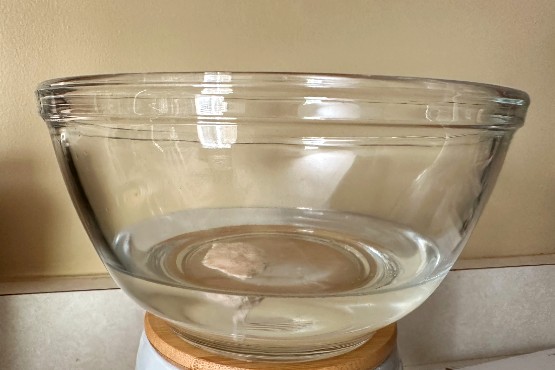
3. Allow your starter to reach its peak. It should double in size and become bubbly. There are different ways to test if your starter is ready. One is the float test: drop a small amount into a bowl of water; if it floats, it's ready to use.
When Will a Sourdough Starter Reach its Peak?
A sourdough starter will usually double in size and become bubbly between 4 and 12 hours after being fed, this is the best point to use since it's at its fullest and has the most bubbles. After reaching its peak, it will start to deflate.
There are many variables that can affect how slow or fast your sourdough starter will peak.
For example, a 1:1:1 ratio will peak faster than a larger ratio like 1:5:5. This is because, with the smaller ratio, it has less food to consume before it peaks. However, don't be afraid to try different ratios and see which one works best for you and your schedule.
Common Feeding Ratios for Sourdough Starters
(This is the minimum feeding ratio. It’s often used when creating a new starter or when you want your starter to peak quickly, but it needs more frequent feedings.)
(A common ratio for regular daily maintenance, or for preparing your starter to be stored in the fridge for a few days.)
(Useful when you want a slower peak. It’s also good for strengthening your starter.)
(Ideal for extending the time between feedings, or for storing your starter in the fridge for up to two weeks.)
(Perfect for prepping your starter before going on vacation. It gives your starter plenty of food so it can survive in the fridge for several weeks without feeding.)
Tips: